A Passionate Topic
Thoughts on selecting guitar string gauges can range from the simplest suggestions to what might amount to a holy war. There are certainly some guidelines that you can use, but in the end it comes down to what works best for you, your playing style, your specific instrument, and those ten things at the ends of your hands.
General Guidelines:
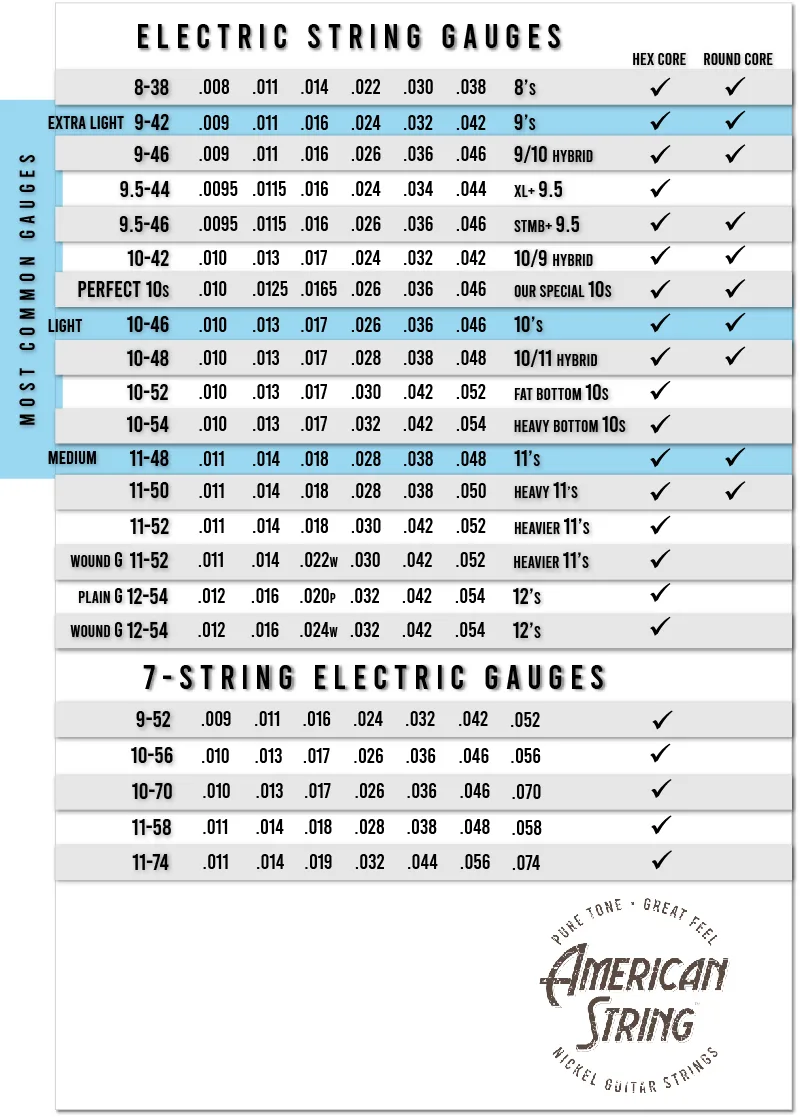
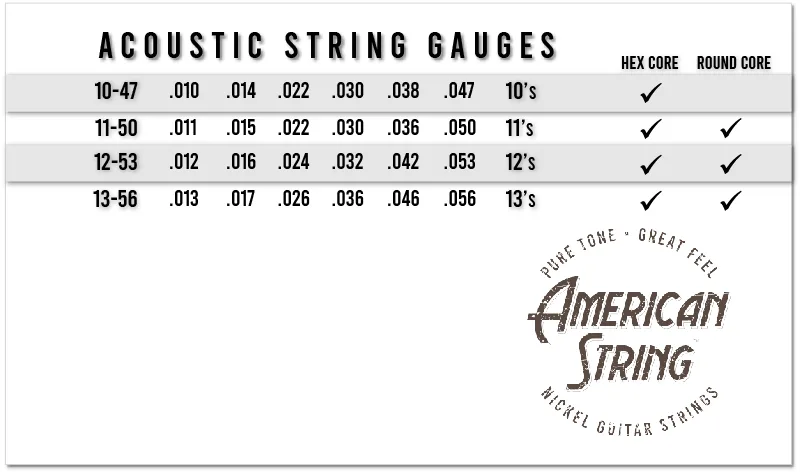
- Start with the most used gauges. That is 10-46 for electrics, and 12-53 for acoustics.
- Adjust up or down in those most used gauge ranges based upon your preferences. Still, in the beginning stay in that more standard range as you dial-in your preferences. For example, if you want to try lighter go to the 9-42s from the 10s. Further, if you want to try heavier, go to the 11-48s from the 10s.
- If you want to try the more "exotic" gauges, do it with a purpose. For example, you might like the feel and playability of the lighter strings but you want that heavier bottom end. The hybrid of the 9/10s 9-46 (STMB) might be the ticket for your pick attack, how you play, and everything else in your signal chain.
- If needed, dial that in based upon the specific instrument. For example, you might not be able to get the neck relief you need if you move to 8-38s from 10-46s. That will likely require a new setup and some guitars might not be able to be setup for that.
- You may want to try some 9.5-44 sets on your Teles and Strats. Some players swear by these 9.5-44 (XL+) sets for their Fenders and other 25.5″ scale length guitars.
- There is also plenty of lore out there about string gauges. Some examples are that Billy Gibbons plays 7s. Stevie Ray Vaughn played heavy-duty "bridge" cables. That may be true, and we say, give both of them a try if that is your thing. Billy Gibbons is going to sound like Billy Gibbons, SRV is going to sound like SRV, and you are going to sound like you.
- Bottom line is,... pursue your tone and the joy of playing. Do your best to enjoy all of it.